Firewalls

There are two main reasons why some companies are hesitant to plug into the Internet.

  1. They know they’ll be exposing their company data to outside attacks from malicious individuals and malware.
  2. They fear their employees might get too many distractions: games, porn, chats, videos, and even social networking sites.

One vital component for your overall security strategy against such concerns? A firewall.

A firewall can block unauthorised access to certain Internet services from inside your organisation as well as prevent unauthenticated access from the outside. It is also used to monitor users’ activities while they were online.

In an enterprise setting, one may expect a collection of firewalls either for providing layered protection or segmenting off different units in the organisation. Some areas only need a standard line of defence while others require more restrictions. As such, certain firewalls may have different configurations compared to others.

Naturally, the more intricate an organisation’s defence requirements get, the more complex the task of monitoring, testing and configuring the firewalls becomes. That’s why we’re here to help.

  • We’ll evaluate your network as well as the security requirements of each department under your organisation to determine which firewall architecture is most suitable.
  • To achieve maximum efficiency, we’ll point out where each firewall should be positioned.
  • We’ll work with your key personnel to make sure all firewall configurations are set and optimised with your business rules in mind.
  • If a large number of firewalls are required, we’ll help you set up a firewall configuration management system.
  • Firewalls should be regularly tested and assessed to ensure they are in line with the organisation’s security policies. We’ll perform these routine tasks as well.

Firewalls aren’t very good at defending against sophisticated viruses. There are much better solutions for malware-related vulnerabilities, and we can help you in that regard too.

Other defences we’re capable of putting up include:

Check our similar posts

Which Services to Share?

It often makes sense to pool resources. Farmers have been doing so for decades by collectively owning expensive combine harvesters. France, Germany, the United Kingdom and Spain have successfully pooled their manufacturing power to take on Boeing with their Airbus. But does this mean that shared services are right in every situation?

The Main Reasons for Sharing

The primary argument is economies of scale. If the Airbus partners each made 25% of the engines their production lines would be shorter and they would collectively need more technicians and tools. The second line of reasoning is that shared processes are more efficient, because there are greater opportunities for standardisation.

Is This the Same as Outsourcing?

Definitely not! If France, Germany, the United Kingdom and Spain has decided to form a collective airline and asked Boeing to build their fleet of aircraft, then they would have outsourced airplane manufacture and lost a strategic industry. This is where the bigger picture comes into play.

The Downside of Sharing

Centralising activities can cause havoc with workflow, and implode decentralised structures that have evolved over time. The Airbus technology called for creative ways to move aircraft fuselages around. In the case of farmers, they had to learn to be patient and accept that they would not always harvest at the optimum time.

Things Best Not Shared

Core business is what brings in the money, and this should be tailor-made to its market. It is also what keeps the company afloat and therefore best kept on board. The core business of the French, German, United Kingdom and Spanish civilian aircraft industry is transporting passengers. This is why they are able to share an aircraft supply chain that spun off into a commercial success story.

Things Best Shared

It follows that activities that are neither core nor place bound – and can therefore happen anywhere ? are the best targets for sharing. Anything processed on a computer can be processed on a remote computer. This is why automated accounting, stock control and human resources are the perfect services to share.

So Case Closed Then?

No, not quite. ?Technology has yet to overtake our humanity, our desire to feel part of the process and our need to feel valued. When an employee, supplier or customer has a problem with our administration it’s just not good enough to abdicate and say ?Oh, you have to speak to Dublin, they do it there?.

Call centres are a good example of abdication from stakeholder care. To an extent, these have ?confiscated? the right of customers to speak to speak directly to their providers. This has cost businesses more customers that they may wish to measure. Sharing services is not about relinquishing the duty to remain in touch. It is simply a more efficient way of managing routine matters.

How AI Helps Improve Field Service

Its seems that with the current rate of technological innovation that these is something new every single day.  Therefore, you’re always looking forward to a new technological innovation that’s going to help you make your business operations more efficient and automated.

One of the most fascinating milestones in the field of technology is the integration of Artificial Intelligence (AI) in business. In one way or the other, AI gives a glimpse of machine supremacy that allows computers to perform tasks that were initially performed by humans. 

Are machines going to completely replace people in the workplace?

Of course, not.  Technologies like AI and Machine Learning are designed and meant to support employees in doing their tasks too boost their productivity.

AI is predominantly used to eliminate jobs and tasks that humans find boring, demotivating or monotonous. In some cases AI is also used to do jobs that are considered dangerous for humans to preform.

Previously the most common implementations for AI were all about gaming, entertainment, and advanced science,  now it’s spreading into a number of industries including the field service industry.

FieldElite – Field Service Software , can help you optimise the day-to-day operations of your business.

AI in field service management will enhance you business capabilities with:

  • Information Sharing
  • Real Time Updates
  • Automated Workflows
  • Digital Form Data Collection
  • Data Analysis

Improved Customer Service

For Service Based companies, customer retention is vital. Primarily because It can be 5-25 times more costly to acquire a new customer than it is to retain an existing ones.

Therefore customer retention should be a primary focus.? The good news is that by making use of AI you can implement services It can be 5-25 times more costly to acquire a new customer than it is to retain an existing one.

Staying on top of and ensuring you satisfactorily address and meet you customer demands and expectations can be a daunting task.? It can also be an expensive one,? especially for small field service based businesses like :

  • Heating & Plumbing Engineers
  • Electrical Contractors
  • Fire Safety Inspectors
  • HVAC Engineers
  • Facility Management
  • Building, Construction & Trade

Implementing Artificial Intelligence and Machine Learning to automate mundane and repetitive customer administration tasks will enable your staff to be free to provide additional value added tasks for your customers. Making your customers happier.

?Think about the active Chatbots. You can always get complaints directly from customers and address them right away.??

If at any point the customer is unhappy with your services, they can always raise the issue via the Chatbots. Since the bots contain necessary customer information, you can always get back to them and fix the issue at hand.?

With AI in field service, you can solve problems before they arise, or what is otherwise known as predictive maintenance,? In that way, you’ll have better customer relations because you’ll be able to address your customer concerns before they even become aware of them.

Improved Productivity

Scheduling tasks and managing the workforce isn’t a walk in the park. It goes beyond assigning tasks to your team members in the field and giving them deadlines to meet. Whether it’s a small firm or a big organisation, it’s quite difficult to organise the workforce.?

However, adopting Artificial Intelligence can iron out the difficulties most field organisations face in scheduling and managing tasks. Some years back, most firms relied on human intelligence to dispatch jobs to the right people based on given conditions. This was quite difficult, especially that it wasn’t always successful. But thanks to AI. With field service apps like FieldElite scheduling tasks and managing workforce is only a few clicks away.?

What’s more? There?s no room for error. Therefore, you’ll always match the right people for the job. Again, your team will always get tasks on time. That means, the job completion rate will go up, and hence the workforce becomes more productive.?

Predictive Maintenance

Usually, most business operations are based on ?solve the problem as it occurs?, which is just OK. However, it’s not always safe to wait until a problem occurs so that you solve it. Prevention is better than cure, and that’s why Artificial Intelligence comes handy in Field Service.

Using FieldElite Workforce Management Software , you don’t have to wait until something breaks.? Utilizing AI in field service enables you to proactively address field service needs and prevent unforeseen failures and interruptions.?

The ability to predict field service needs through field service apps like FieldElite enables you to make more accurate forecasts. In this way, resource planning is made easier, and as such, you’ll have smoothly running workflows. Again, by taking care of unforeseen circumstances in advance, you’re flexible enough to take care of the unexpected. And that means the overall productivity of your business will go up.

Job Management

Most field service jobs involve multiple stages that can take several days to complete. In addition to this, more often than not, you have to coordinate lots of equipment and contractors at the same time. All these can’t be achieved solely by human efforts. For more successful outcomes, it’s important to incorporate Artificial Intelligence in your field service operations.?

FieldElite is the field service solution that can help you manage sophisticated tasks. The app is packed with field service management tools that enable you to assign complicated tasks and keep track of your field techs. For long-cycle jobs, FieldElite app enables you to follow up on the activities going on the field to ensure they’re completed.?

With AI, there?s no room for error even when the jobs become more sophisticated.

Data Analysis

?

Field service industry involves lots of data. Some years back, organisations depended on human intelligence to analyse big data. Well, things still worked out, but as a human is to err, the outcome wasn’t always perfect. However, with Artificial Intelligence data analysis, 100% accuracy in data analysis is achievable. Field service solutions like FieldElite provide sophisticated data analytic tools that enable you to crack massive data and offer accurate solutions.?

FieldElite data analytics capabilities give you an insight into what’s not working and what needs to be improved. In that way, you can always address matters arising and take care of the loopholes.?

It’s time to go paperless with field management software like FieldElite if you?d like to make your business more profitable. Apart from improving the productivity of your workforce, incorporating AI in your business increases profitability. If you’re still doing your usual field rounds with a clipboard, it’s time to simplify your task with FieldElite app.?

Contact Us

What Heijunka is & How it Smooths Call Centre Production

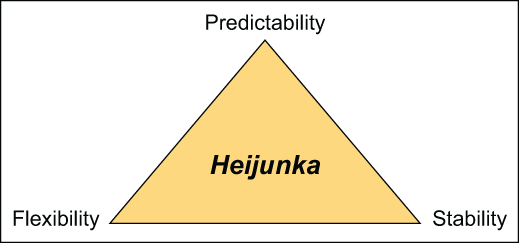
The Japanese word Heijunka, pronounced hi-JUNE-kuh means ?levelling? in the sense of balancing workflows. It helps lean organizations shift priorities in the face of fluctuating customer demand. The goal is to have the entire operation working at the same pace throughout, by continuously adjusting the balance between predictability, flexibility, and stability to level out demand.

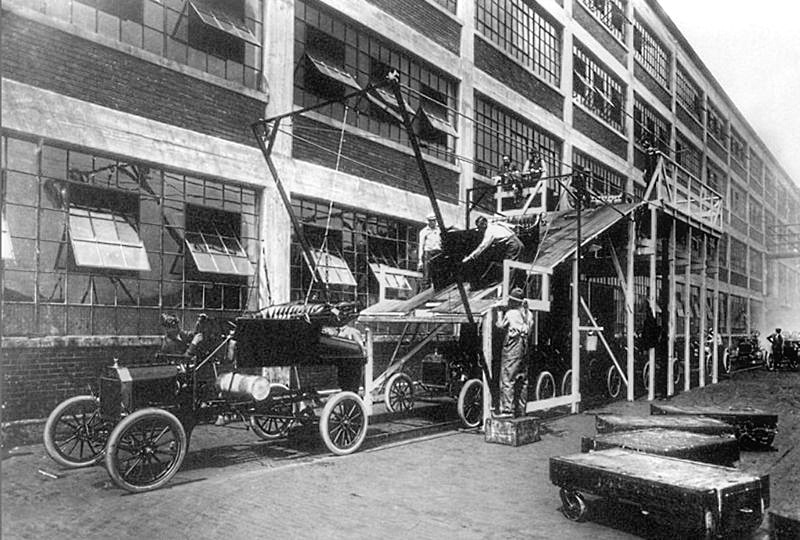
Henry Ford turned the American motor manufacturing industry upside down by mass-producing his iconic black motor cars on two separate production lines. In this photograph, body shells manufactured upstairs come down a ramp and drop onto a procession of cars almost ready to roll in 1913.

Smoothing Production in the Call Centre Industry

Call Centres work best in small teams, each with a supervisor to take over complex conversations. In the past, these tended to operate in silos with each group in semi-isolation representing a different set of clients. Calls came through to operators the instant the previous ones concluded. By the law of averages, inevitably one had more workload than the rest at a particular point in time as per this example.

Modern telecoms technology makes it possible to switch incoming lines to different call centre teams, provided these are multi-skilled. A central operator controls this manually by observing imbalanced workflows on a visual system called a Heijunka Box. The following example comes from a different industry, and highlights how eight teams share uneven demand for six products.

This departure from building handmade automobiles allowed Henry to move his workforce around to eliminate bottlenecks. For example, if rolls of seat leather arrived late he could send extra hands upstairs to speed up the work there, while simultaneously slowing chassis production. Ford had the further advantage of a virtual monopoly in the affordable car market. He made his cars at the rate that suited him best, with waiting lists extending for months.

A Modern, More Flexible Approach

Forces of open competition and the Six Sigma drive for as-close-to-zero defects dictates a more flexible approach, as embodied in this image published by the Six Sigma organisation. This represents an ideal state. In reality, one force usually has greater influence, for example decreasing stability enforces a more flexible approach.

Years ago, Japanese car manufacturer Toyota moved away from batching in favour of a more customer-centric approach, whereby buyers could customise orders from options held in stock for different variations of the same basic model. The most effective approach lies somewhere between Henry Ford?s inflexibility and Toyota?s openness, subject to the circumstances at the moment.

A Worked Factory Example

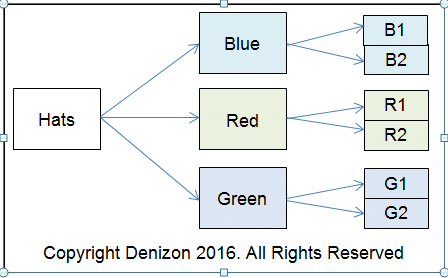
The following diagram suggests a practical Heijunka application in a factory producing three colours of identical hats. There are two machines for each option, one or both of which may be running. In the event of a large order for say blue hats, the company has the option of shifting some blue raw material to the red and green lines so to have the entire operation working at a similar rate.

Predictability, Flexibility, and Stability at Call Centre Service

The rate of incoming calls is a moving average characterised by spikes in demand. Since the caller has no knowledge whether high activity advisories are genuine, it is important to service them as quickly as possible. Lean process engineering provides technology to facilitate flexibility. Depending on individual circumstances, each call centre may have its own definition of what constitutes an acceptably stable situation.

Contact Us

  • (+353)(0)1-443-3807 – IRL
  • (+44)(0)20-7193-9751 – UK

Ready to work with Denizon?