
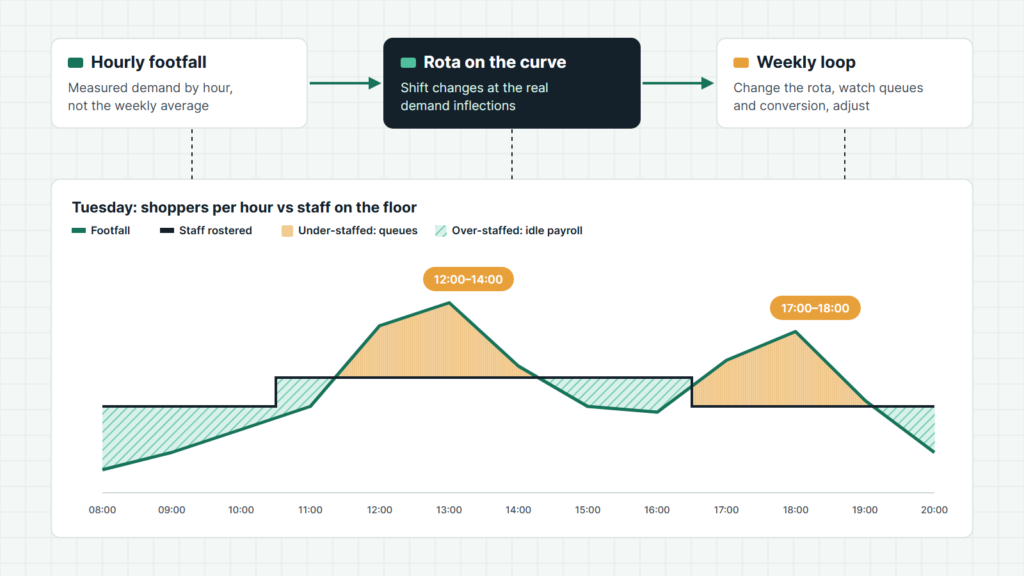
The retail rota is usually built from an average: smoothed weekly sales, a manager’s instinct, last year’s pattern. It’s a reasonable method for a world where demand is flat, which is not the world retail operates in.
The mismatch, quantified
Measured against hourly footfall, most stores discover the same shape:
- Two or three hours daily where staffing is materially under demand and queues form; these hours quietly drive basket abandonment and loyalty erosion, both invisible in daily takings.
- Long stretches where staffing exceeds demand measurably; pure payroll waste, equally invisible, because nobody was counting the door.
The cost of the mismatch rarely appears anywhere: it’s split between misattributed “conversion decline” and unexamined payroll percentage, so it persists for years.
The fix in practice
Real hourly entry data, gathered anonymously at the door, gives the rota a foundation:
- Shift boundaries set at the actual demand inflections, not round clock hours.
- Seasonal-peak planning using measured seasonal curves rather than the average.
- A testable loop: change the rota, watch conversion and queue data the following week, adjust — treating staffing like the measurable lever it is rather than an annual negotiation.
The commercial maths tends to be decisive for stores that run it: payroll savings from trough trimming usually fund the peak-hour coverage, so the initiative pays for the sensing before the conversion uplift is even counted. The reporting guide covers the routine that keeps the comparison honest week to week.
CrowdSense delivers the hourly entry curve without identifying anyone. Talk to Denizon about instrumenting a pilot store.
CrowdSense counts people and monitors indoor conditions across public and commercial spaces — anonymously, on Cisco Meraki Wi-Fi, cameras and sensors you may already own. Talk to our team about measuring a site or a portfolio.